Superior Customer Service: It’s In Our DNA
It’s in our DNA. It made us who we are. DojoNetworks got its start more than 20 years ago as an...


Picture a community where the internet just works. Residents stream, game and jump on video calls without a second thought. Your leasing team spends the day touring prospects instead of fielding WiFi complaints or questions. And when something inside the network starts to slip, it's found and fixed before anyone notices.
That's the experience DojoNetworks has been building since the year 2000. We like to say we're 99.9% a service and support company. The technology matters, but residents only care that everything works, smoothly, every single day. We call our approach Fanatical Resident Support, and it shapes everything we do.
It's also why we don't wait for a resident to complain, many providers do. A connection gets slow, then slower, then drops. Residents live with it for a day or two, then call the leasing office, post in the community Facebook group or Reddit, or quietly decide not to renew. Only then does someone open a ticket.
That isn't managed WiFi. It's reactive WiFi with a nicer name.
Property owners ask providers plenty of questions. What speeds do you offer? How much will this increase my portfolio value? How fast can you install?
All relevant questions, but they skip the one that predicts how your network will perform in year three, year five and year ten:
How much WiFi experience does your provider actually have?
Most managed WiFi providers in multifamily are five or six years old. Many of them started as internet resellers and added "managed WiFi" after it became a popular amenity for multifamily developments.
DojoNetworks has been running wireless networks for 28 years and multifamily networks for 26. While others added managed WiFi to their lineup, we built our entire company around it.
We Were Doing WiFi Before It Was Called WiFi
Our story doesn't start in a pitch deck. It starts in 1998.
That year we became one of the first wireless ISPs (WISPs) in the world, delivering internet over the air before "WiFi" was a household word. Most people were still listening to a dial-up modem screech.
In 2000 we began building high-speed internet networks for multifamily communities. By 2003 we were delivering in-apartment WiFi to multifamily residents.
In 2006 we deployed a large, metro-wide network with indoor and outdoor coverage and seamless roaming. That was years before "managed WiFi" existed as a category, let alone a line item on an MDU proposal. Our network had real time analysis when that was unheard of for such networks, we had external hardware monitors watching live WiFi handshakes and connections so we could identify and see problems as they happened. We have only gotten better over time.
Since then, we've supported every generation of wireless, all the way to WiFi 7.
That's roughly five times the experience of a typical managed WiFi provider. It's likely more real-world deployment exposure than many of the equipment makers whose gear your provider is installing.
WiFi doesn't fail in the lab.
It fails in a concrete stairwell that eats signal. It fails in a mid-rise surrounded by hundreds of competing networks. It fails in Unit 3B, where the resident moved the router behind the TV and then wonders why Netflix buffers.
Spec sheets can't teach you any of that. You learn it by deploying networks, breaking them, fixing them and doing it again at scale, year after year, building after building.
That's the mistaken belief that costs owners residents and renewals: "WiFi is WiFi. The equipment does the work."
Two providers can install the same access points in the same building and get completely different results. The difference is the design, the monitoring, and the people who know what to do when something goes sideways at 2 a.m.
Losing renewals over WiFi complaints you can't control? Talk to a Dojo MDU specialist about a network designed by people who have been doing this since 1998 and building networks even longer than that. Our founder started building connected systems and networks in the early '80's.
This is where the Dojo difference stops being history and becomes something you can measure every day. Most managed service providers monitor whether the property is "up." The internet circuit is live, the core switch is responding, so the dashboard shows green.
Meanwhile, deep inside the building:
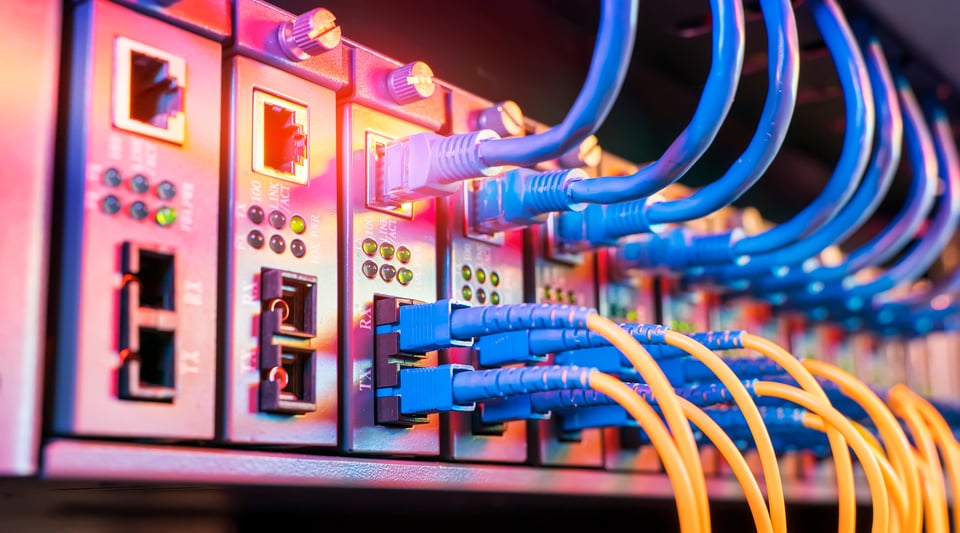
A cable that drops from 1000 to 10 Mbps doesn't trip an outage alarm. Technically, it's still "working." It just works poorly enough that every resident on that link has a miserable experience.
Most providers never see it. Not until the complaints pile up. ELEMENTO SEES IT.
Elemento is DojoNetworks' purpose-built platform for monitoring, support, and network management. It's the reason our networks run at peak performance all the time, not just after a customer call.
Elemento monitors individual access points in real time. If one goes offline, we know immediately. We don't wait for a resident to tell us.
Elemento also watches the backbone connection behind every access point. If a link that should run at gigabit or multi-gigabit speed suddenly negotiates down to 100 or 10 Mbps, the classic sign of a cable fault, Elemento flags it and alerts our team in real time.
We're not aware of another multifamily managed service provider that monitors at this level. Most aren't even looking. And we're not stopping there.
The Problem That's Nearly Impossible to Catch
Ask any network engineer which problem they hate most. They won't say a total outage. Outages are easy: something is down, you find it and you fix it. The nightmare is intermittency.
That's a bad cable or a flaky switch port that works fine 95% of the time and fails at random. It never fails long enough to trigger an alarm, and it's never down when the technician shows up. Residents get dropped video calls, a game that lags at the worst moment, and a connection that "just feels off," while every diagnostic says everything is fine.
These faults can go undetected for months, sometimes indefinitely.
Our R&D team is building systems that detect bad cables and bad ports by spotting the intermittent behavior that's almost impossible to catch manually, then reporting it so we can fix it before it becomes a pattern of complaints.
That's the difference between a provider who simply fixes problems and one who finds them, fixes them, and ensures it's working in the future.
Elemento isn't just how our team watches the network. It's a single-screen system that is accessed by DojoNetworks, our property managers, and residents, all from the same source of truth. It even auto-configures new properties in record time, so your community is up and running faster.
For owners and property managers, Elemento delivers real-time visibility across every property in your portfolio. It enables pulling real-time or historical reports on internet and WiFi performance, seeing bandwidth usage by property, access point or individual resident, and tracking uptime, support ticket volume and how quickly tickets are getting resolved. You can also activate or deactivate resident accounts, resend credentials, grant temporary guest access and spot password sharing, without waiting on anyone.
For smart buildings, Elemento can serve as the monitoring hub for IoT devices such as leak detection, door sensors, humidity monitors, and smoke or fire sensors, helping you protect the asset as well as the connection.
The results show where it counts. Elemento has helped us cut average support ticket resolution time by 95%, and our goal keeps moving forward: solve problems before residents ever feel the need to open a ticket.
How many hours a week does your team spend playing IT support? See how Elemento works and why most Dojo issues get resolved before a resident ever calls your office.
None of this is engineering for its own sake. Here's what it means on the ground.
Your leasing team stops doing IT's job. When problems get caught and fixed remotely, router tickets stop landing on the leasing desk. Your staff goes back to touring prospects.
AI is constantly analyzing the network. Dojo is constantly improving. Implementing AI to analyze and identify issues, escalate and resolve issues in real-time, and alert engineers to things most monitoring doesn't catch.
Your residents get a human, fast. When a resident does need help, our Fanatical Resident Support team answers 24/7. Calls are answered by a human in under 15 seconds, and tickets are typically resolved in under 10 minutes. That support comes at no additional fee, and it has earned a 99% resident satisfaction rate.
Fanatical support is a culture, not a department: the book Delivering Knock Your Socks Off Service is required reading for every Dojo employee. Everyone in the company, from engineering to billing, sees customer service as part of their job, because every interaction with a resident or property team is a chance to make a great impression.
Fewer residents need help at all. Because we catch issues early, fewer than 1% of residents need support in a given year.
Your residents can help themselves. Through Elemento, residents can manage their devices, upgrade their speed, pay their bills, create custom SSIDs for their apartment, and get instant answers from an AI support agent (via chatbot, voice or text), with a real person instantly available. No one is forced to use the AI but it accelerates their issue resolution.
Your reviews stop mentioning WiFi. Prospects research a property's internet reputation before they tour. A network that just works is a network nobody writes one-star reviews about.
Your brand isn't on the hook for someone else's mistakes. When a national ISP drops the ball, residents blame the property. With Dojo, you have one accountable partner that designs, monitors, and fixes the network after install.
That last point matters more than most owners realize. Our customers stay with us: Dojo has a 100% customer retention record across more than two decades.
Before You Sign With Anyone, Ask These Three Questions
Whether you're evaluating Dojo or anyone else, put these questions in front of every provider:
Then listen carefully. Experience shows up in the answers. So does the lack of it.
Tired of apologizing for your internet provider's mistakes? Download our Vendor Qualification Questionnaire and see how your current provider stacks up.

Anyone can install access points. The equipment is available to everyone.
What isn't available to everyone is 28 years of watching networks succeed and fail in real buildings. Neither is a platform that watches every access point and every cable in real time, or a team that treats a 10 Mbps link as an emergency instead of a footnote.
That's the Dojo difference.
Your residents won't notice when we catch a failing cable at 3 a.m. They'll just notice that the WiFi works.
That's the point.
Want WiFi that helps protect occupancy and portfolio value? Reach out to schedule a conversation with our team to see what 28 years of WiFi experience can do for your property.

We’re Here to Help Through Top of the Line Technology And Professional Support.