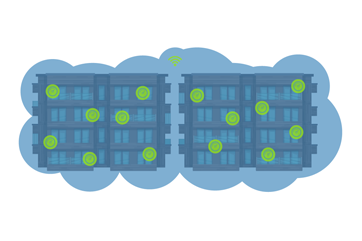
6 Reasons Multi-Family Apartment Complexes Should Consider Managed WiFi Services
Although managed WiFi options have become a popular choice for multi-family apartment complexes and...




In a multifamily property, guest WiFi should do more than give visitors a quick way to get online. It should provide secure, isolated internet access that works alongside resident service without exposing private devices, slowing performance, or creating extra headaches for property teams.
That’s exactly what a guest network is in DojoNetworks’ ManagedWiFi+® environment.
In an apartment community, student housing property, senior living campus, or other multi-tenant building, a guest network is a secure, centrally managed internet service designed for visitors, vendors, prospects, and short-term users. It operates separately from the private networks used by residents, helping properties offer convenient internet access without compromising privacy or overall network performance.
For owners and operators, that makes guest WiFi a valuable part of a broader managed connectivity strategy, especially as internet continues to function like a core utility and competitive amenity in multifamily housing.
A guest network is a dedicated wireless network created specifically for non-residents. Instead of placing visitors on the same network as residents or building systems, the property’s managed WiFi environment creates a separate access layer for temporary internet use.
This matters because apartment and multifamily properties are dense, device-heavy environments. Residents expect private, reliable connectivity for streaming, working, gaming, learning, and smart home use. Guests may need internet access in the lobby, leasing office, clubhouse, fitness center, co-working area, or other shared spaces, but they should not be able to see resident devices or interact with resident traffic.
A properly designed guest network solves that problem by giving visitors internet access while keeping resident connectivity private and protected.
In a managed WiFi deployment, guest access is not typically delivered through a single open network. Instead, it is built using layered controls that help separate traffic, manage access, and protect the resident experience.
Managed WiFi systems use network segmentation to create logical boundaries between different users and services across the property. One of the most common tools is a VLAN, or Virtual Local Area Network, which allows the central router and access points to create a distinct guest environment that is separate from resident traffic and other operational systems.
That separation is what makes a guest network secure. A guest user can access the internet, but they cannot browse other guest devices, view resident-connected equipment, or access private traffic from nearby units.
Many multifamily guest networks use a captive portal instead of a simple shared password. When a visitor joins the guest SSID, a landing page appears and asks them to take an action before internet access is granted. That may include entering a password, accepting terms and conditions, or submitting basic contact information. Our typical system uses two-factor authentication using the guests phone number. Making it easy for any guest to use the network, but not anonymous.
This approach gives properties more control over who accesses the network and creates a cleaner, more professional experience than an unsecured open signal.
Guest WiFi should not interfere with the resident experience. Managed WiFi systems often use traffic management policies and bandwidth controls, so guest traffic is handled as lower-priority or best-effort traffic while resident traffic receives higher priority.
That means a visitor can still browse, check email, or use the internet in common areas, but the network is designed to protect the performance residents depend on every day.
In a managed environment, guest WiFi is not left unmanaged after installation. The network is monitored continuously by Dojo’s Elemento customer management system and protected through modern security protocols, firewall policies, and threat detection rules.
In many modern managed WiFi deployments, a guest can move from one amenity area to another without repeatedly logging back in. The network controller can hand off that connection across access points for a smoother property-wide experience.
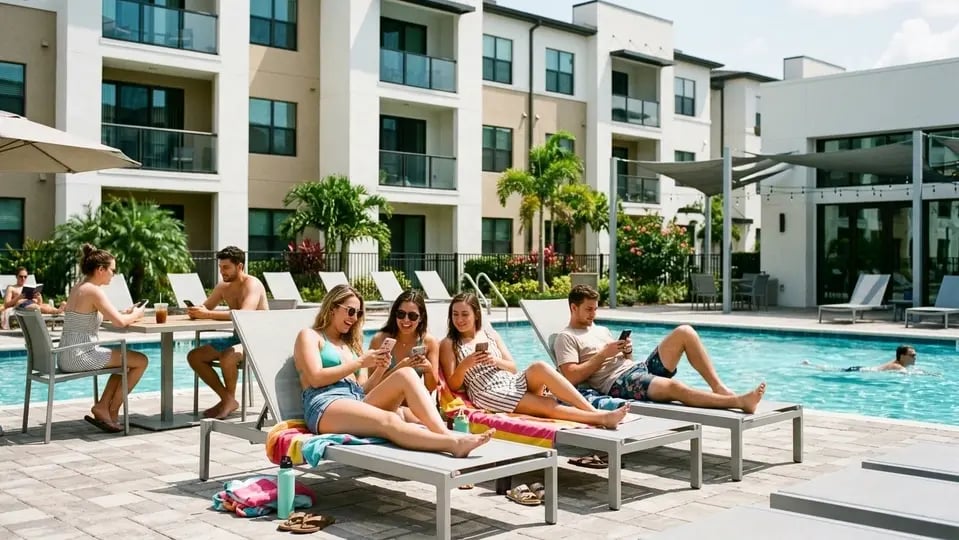
The biggest misunderstanding about guest WiFi in apartments is the idea that it is simply free internet in common areas.
A true guest network is a separate, policy-controlled network designed to protect residents and the property while still delivering convenience. That separation is especially important in multifamily and MDU settings, where many users and devices are active at the same time.
Without segmentation, guest traffic could increase risk, reduce visibility, and create performance problems. With segmentation, owners can offer a stronger amenity while maintaining control.
A guest network and a resident network serve different purposes, even when both exist within the same property-wide WiFi environment.
This distinction helps protect the resident experience while still allowing ownership to offer guest internet access as part of a modern amenity package.
A secure guest network supports convenience and strengthens the overall property experience.
For multifamily owners and operators, guest WiFi can help to:
These benefits support Dojo’s broader message that property-wide managed WiFi improves convenience, resident satisfaction, and the value of internet as an amenity across apartments and MDU communities.
DojoNetworks’ ManagedWiFi+ is a fully managed solution built for multi-tenant environments, with planning, support, security, and property-wide coverage tailored to MDU use cases. That makes guest networking most valuable when it is not treated as a standalone add-on, but as part of a full property connectivity strategy that includes:
When guest access is built into a broader managed WiFi environment, owners can offer a better amenity experience without sacrificing network control.
A guest network in an apartment or multifamily property should not be an afterthought. It should be a secure, isolated, and centrally managed part of the property’s WiFi strategy.
When designed correctly, guest WiFi gives visitors the access they need while protecting resident privacy, preserving performance, and supporting a more professional property experience. That is why guest networking works best as part of a Managed WiFi solution rather than as a simple open network.
Want to see how secure guest WiFi fits into a full property-wide connectivity strategy? Explore DojoNetworks’ ManagedWiFi+ solution for MDUs and multifamily communities.

We’re Here to Help Through Top of the Line Technology And Professional Support.