
Common WiFi Problems in Senior Living Communities
WiFi is now as essential in senior living communities as electricity or running water. Residents...
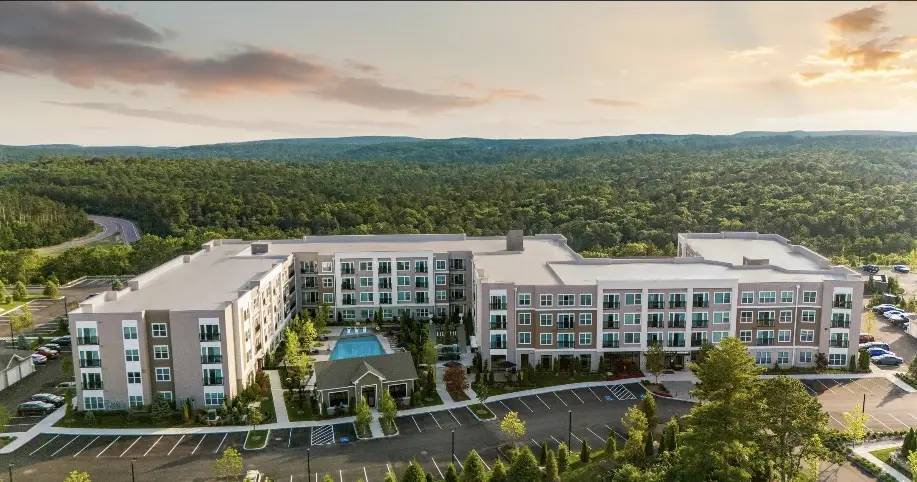



Your internet provider likely doesn't know what a "student turn week" is and has never had to explain to a leasing agent why a bad WiFi review just cost a signed lease. They have also likely never designed a network for a 300 unit building where 900 devices hit the same access point at 7 p.m. on a Sunday. They usually sell the same plan to a single-family home in the suburbs that they sell to your entire property, and call that "service."
That is the quiet problem sitting underneath a lot of connectivity complaints in multifamily, student housing, senior living, and affordable housing communities right now. The provider isn't a bad company. It's just the wrong kind of company for multi-dwelling unit (MDU) needs. They're a generalist ISP trying to do a specialist's job, and the property (not the provider) absorbs the cost when that mismatch shows up.
This is exactly why "MDU WiFi specialist" has become a search term property owners and operators are typing into Google at 11 p.m. after another round of resident complaints. They are starting to suspect what this post is going to confirm: not every internet provider is built the same way, and for a MDU property, that difference is not small.
A generalist ISP (insert large brand name provider here) sells connectivity to whoever will buy it: homeowners, small businesses, single tenants, and building owners. Its network, support model, and pricing were designed around one unit at a time.
Here is the number that explains why it feels that way: apartment housing (MDUs) typically makes up only about 5% of a large national ISP's overall business. Your multi-tenant property is not their focus. It is a rounding error next to millions of single family residential accounts, which is exactly why the support, the network design, and the account management all feel like they were built for someone else, because they were.
An MDU WiFi specialist does one thing: it builds, supports, and manages internet for entire properties, from a 60-unit conventional apartment community to a 500-bed student housing tower or 1500 unit community, to a senior living campus where a dropped connection isn't just an inconvenience, it's a safety issue.
Dojo Networks has operated as an MDU specialist for over 26 years. Dojo doesn't "also do apartments" and didn't "recently expand into multifamily." Dojo exclusively specializes in MDU managed WiFi, Back in 2000, our founder connected his first multifamily property to high-speed internet and we've never looked back.
That kind of focus shows up in ways that a resident notices before a property manager does:
Is your current provider actually built for a property like yours, or are you the exception it's improvising around?
Here's the part that gets expensive. When a generalist ISP fumbles a support call, drops a connection, or takes three days to send a technician, the resident does not blame the ISP. The resident blames the property whether they are buying service directly from the provider or have service in bulk.
That is not a hypothetical. Internet is consistently rated one of the top amenities renters care about, right up there with location and price. Prospective residents research a property's internet reputation before they ever schedule a tour, and one bad WiFi or internet review can quietly cost a lease to never have a chance in the first place.
So, ask yourself honestly:
If those questions made you wince a little, that's the mismatch talking. A specialist is built to make sure you never have to ask them.
Curious what unreliable connectivity might already be costing your property in renewals? Run the numbers with Dojo's Rental Profit Calculator and see where the gap actually is.
Anyone can claim "specialist" on a homepage. Numbers are harder to fake.
Dojo Networks has served multi-dwelling properties for more than 26 years and maintains 100% client retention across that entire history. Not "most clients." Not "a 90-something percent renewal rate we're proud of." Every property that has partnered with Dojo has stayed with Dojo.
Sit with that for a second, because in an industry where a bad support call can define an entire tenant's experience of a property, a perfect retention record over more than two and a half decades is not a marketing line. It's a signal that the specialist model actually works, and that owners who have tried the alternative have chosen not to go back.
That kind of track record does not happen by accident. It comes from a few specific things a generalist provider structurally cannot replicate:
Fanatical Resident Support. Dojo is 99.9% a service and support company, with technology second. Residents get 24/7 support at no extra fee, and the team is measured on resident satisfaction rather than how fast they can close a ticket. When was the last time your provider's support team was evaluated on whether the resident actually felt taken care of?
Elemento, a purpose built platform. Instead of juggling separate systems for residents and property staff, Dojo's proprietary Elemento dashboard gives both sides a single, streamlined view for tracking and resolving issues, so a WiFi complaint doesn't turn into three days of phone tag.
A network built for what MDU properties actually need. Fiber backed, symmetrical high-speed service, unlimited data with no overages, and carrier class equipment designed to handle the density of an apartment building or a student housing tower rather than a single house on a quiet street.
Property economics that reward the owner, not just the provider. Through Dojo's bulk internet and revenue share model, connectivity stops being a line-item item expense and starts contributing to NOI and property value, with owners earning margin instead of just paying a bill. All while providing the residents with better pricing and better service than they can get elsewhere.
Are you still treating internet as a cost center, when it could be a contributor to your bottom line? That is worth a real conversation, not a guess.

Here's what actually makes "specialist" more than a word on a homepage: Dojo built its own proprietary platform, Elemento, specifically to run connectivity for multi-dwelling properties. Elemento is doing work most owners and residents never see until they compare it to what they had before. It continuously monitors the connection status and speed of every single unit on the property, in real time, which means a slow access point or a failing device gets caught and flagged before it turns into a stream of angry work orders. A generalist ISP finds out a unit has been down for two days when a resident finally calls, a team with Elemento already knows.
That same platform hands residents a customer portal of their own, so they are not stuck waiting on hold to fix something they could handle in seconds. From the portal, a resident can contact support directly, upgrade their own speed tier if they need more bandwidth, and check their account information without ever picking up the phone. Every resident also gets a dedicated guest WiFi network set up automatically, so visitors, in-home nurses, dog walkers, or a roommate's friends can get online without ever touching the resident's primary credentials or the property's core network. It is the kind of small detail nobody notices when it works and everybody complains about when it does not exist.
For the property side, Elemento interfaces directly with your property management system to automate onboarding and offboarding, so a new lease gets connected and a move-out gets disconnected without your staff manually creating or killing accounts one by one. That single integration closes the exact "ghost account" problem that plagues properties with heavy turnover, where past residents' logins sit open on the network for months after they've left. Layer in portfolio-wide visibility, bandwidth and uptime reporting, and password sharing detection, and you get a platform that has driven a 95% reduction in average support ticket resolution time and a 99% resident satisfaction rating across Dojo's properties.
Wondering how much staff time a system like this could give back to your team? See the full breakdown of what Elemento does and judge for yourself whether your current provider has anything close to it.
Here's a pattern that shows up constantly on conventional multifamily properties specifically: separate providers for internet, bulk TV, smart access, and IoT devices, none of whom talk to each other, and none of whom will fully own a problem when something breaks.
When something goes wrong at 6 p.m. on a Friday, who does your team actually call? If the honest answer is "it depends which system," that's not a staffing problem. That's a vendor structure problem, and it's one an MDU WiFi specialist is built to solve by consolidating connectivity, bulk TV, and IoT infrastructure under one accountable partner instead of four disconnected ones.

None of this is theoretical. Look at how the national names actually deliver internet to apartment communities today, and the specialist gap shows up in the infrastructure itself, not just in a sales pitch.
AT&T's Community Internet only exists within AT&T's own wireline fiber footprint, roughly 21 states, and AT&T's own property locator tool requires an eligibility evaluation before it will commit to a property at all. If your portfolio has communities in the Northeast, Pacific Northwest, or any of the states outside that footprint, AT&T has nothing to offer them. Dojo evaluates and serves properties nationwide in any state no fiber-build dependency and no eligibility gate to clear first.
Comcast's Xfinity Communities, Cox Communities, and Optimum for Multifamily all deliver MDU internet primarily over DOCSIS coaxial cable, the same architecture used for decades of residential cable modems, with no centralized system coordinating WiFi channels across a building. When every unit runs its own gateway competing for the same handful of non-overlapping 2.4GHz channels, speeds commonly drop 40 to 70% during peak evening hours as devices fight each other for airtime. Elemento's AI driven RF coordination manages that radio environment property wide instead of leaving each unit to fend for itself.
Spectrum's answer is "Spectrum Ready," a pre-installed WiFi 6E router program that lets residents self-activate their own individual Spectrum accounts by scanning a QR code. That is a faster way to sign up for cable internet, not a managed WiFi system: each unit is still its own island, with no property-level dashboard and NO INTERFERENCE management between units.
The pattern repeats across every one of these providers: individual resident gateways instead of one coordinated property network, no real-time operator dashboard comparable to Elemento, and no equivalent to Dojo's SOC 2 Type II certification for a managed MDU WiFi platform. It also shows up the moment something breaks. In a typical cable or telecom deployment, if a single resident's gateway fails, that resident has zero internet until a technician physically replaces it, sometimes days later. In Dojo's managed model, adjacent access points automatically absorb the load so the resident keeps working WiFi while the repair happens in the background. And at the property level, most of these providers run internet to the building over a single cable or fiber plant; if that upstream connection goes down, the entire property loses service at once. Dojo typically brings two independent fiber backbones into a property from separate upstream carriers, so an outage on one triggers automatic failover to the other instead of going dark.
There is one more difference that outlasts any single contract term: with the major cable and telecom providers, the property never owns the network hardware. At the end of the agreement, the equipment and cabeling reverts to the provider and the property starts over from zero with whoever comes next or makes it very difficult to change due to complex agreement terms or infrastructure ownership. With Dojo, the property owns the access points, switches, and cabling outright, so if you were ever unhappy with the service, another qualified managed WiFi provider could step in and manage that same infrastructure without ripping anything out.
Wondering how your current provider's network actually compares to a purpose-built MDU specialist? Talk to the Dojo Networks team and ask them the questions that matter: who owns the equipment, what happens when one unit's connection fails, and whether their WiFi platform has ever been independently audited.
Most owners and operators are not choosing a generalist ISP because they think it's a great fit. They're choosing it because they've never been shown what a genuine alternative looks like, and because switching sounds like a headache.
That belief costs more than it saves. A generalist provider optimizes for volume: sign up as many individual accounts as possible and support them at the lowest sustainable cost. A specialist optimizes for the property itself: uptime across the whole building, a support experience residents actually trust, and infrastructure that adds to the asset's value rather than sitting on it as dead weight.
The properties that eventually make the switch tend to describe the difference the same way. As one property partner put it about the transition to Dojo: there was no competition when it came to the level of service, it was more than they expected.
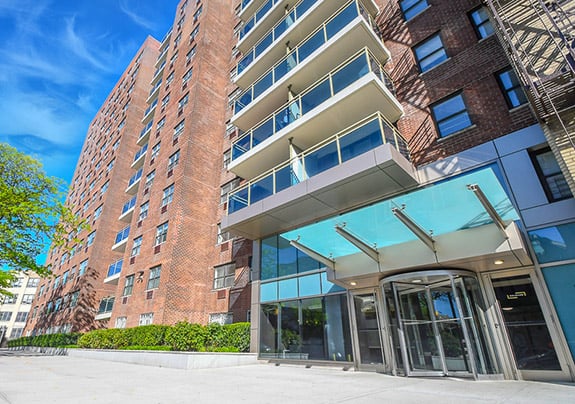
If your current provider cannot answer these questions clearly, it's time to consider a MDU WiFi specialist:
Does your network get redesigned specifically for your property's density and layout, or did you get a standard residential plan with more routers bolted on?
Is your support team measured on resident satisfaction, or on ticket volume?
Does your internet contract help your NOI, or just show up as a cost?
An MDU WiFi specialist exists because multifamily, student housing, senior living, and affordable housing properties are not the same as a single-family home or a small business, and they were never going to be well served by a provider built for one. Twenty six years and a perfect retention record is what happens when a company commits to that difference instead of treating it as a footnote.
Ready to see what a real MDU WiFi specialist can do for your property's connectivity, resident satisfaction, and retention? Talk to the Dojo Networks team and find out what changes when your internet provider actually understands what "your building" means.

We’re Here to Help Through Top of the Line Technology And Professional Support.