DojoNetworks and Gigapower: Scaling Fiber-Backed Managed WiFi for Multifamily Communities
High-Performance Connectivity Now Available for Multifamily Communities DojoNetworks, a leading...



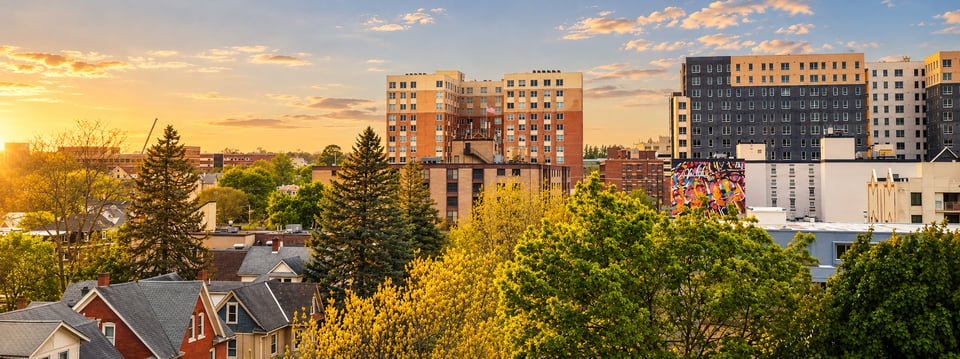
Ask most property owners where their WiFi provider is headquartered and you will get a shrug, a call center transcript, or a logo they cannot actually place on a map. Ask a Dojo Networks client the same question and they will give you an answer: State College, PA. The building has changed more than once over the years. The town never has, and neither has what that location represents: a team that today keeps more than 70 properties across State College connected, without ever having to fly someone in to do it.
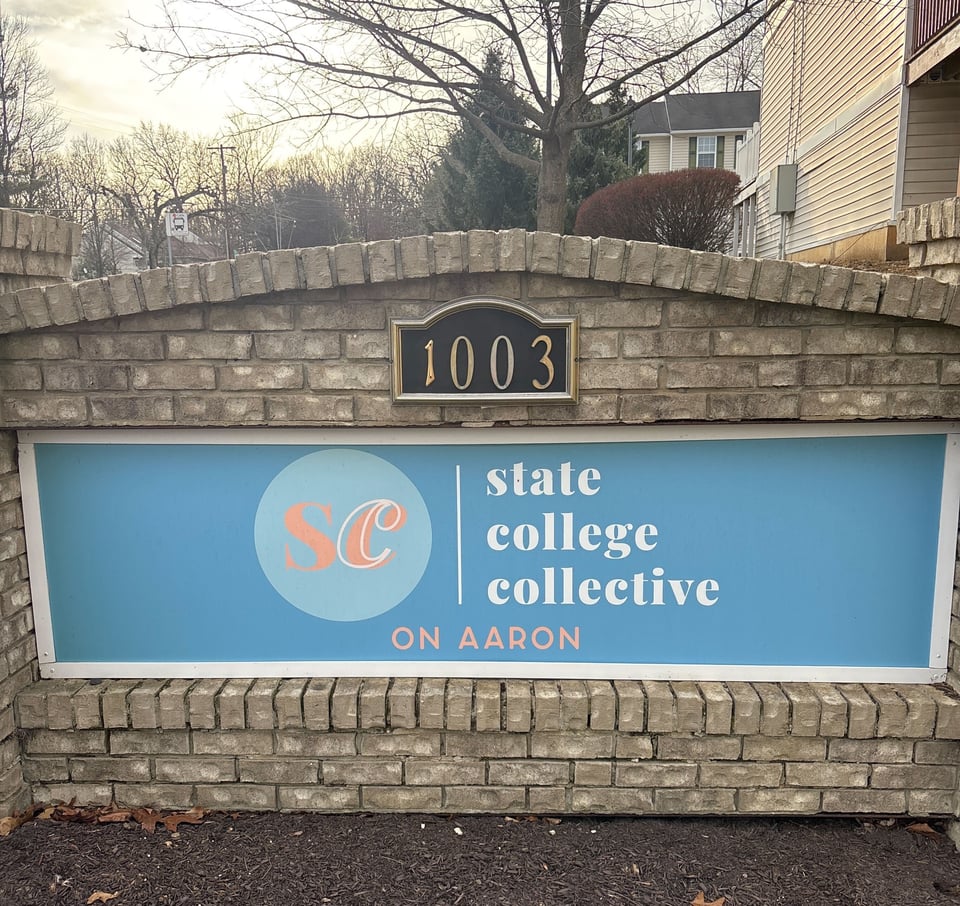
That scale is not an abstraction. Recently, Dojo Networks expanded its footprint even more in State Collage by deploying its Managed WiFi+ service across eight State College communities at once: the five properties in the State College Collective portfolio, Farmstead, Oakwood, Northbrook, Aaron 1 and Aaron 2, along with The Rise, The Brexx and The Pointe. Together, those eight properties account for 1,084 apartment homes across 159 buildings, ranging from a single twelve story tower at The Rise to eighty-two low rise buildings spread across The Brexx. Every one of those units, and every shared amenity space, has gigabit WiFi live the day a resident moves in. No installation appointment. No router to buy. No separate account to open with an outside provider.
That kind of rollout does not happen because a company sells connectivity. It happens because Dojo Networks built its own fiber network across State College instead of reselling somebody else's, infrastructure that today supports more than 70 properties in the area.
"Fall move-in is the hardest week of the year for a property's internet, and it's the week residents form their opinion of it," said Dan Myers, CEO of Dojo Networks, on the recent rollout. "Getting these communities turned up means a resident carrying boxes up the stairs is online before the boxes are unpacked, and the onsite teams can spend the day on residents instead of on WiFi passwords."
That is not a company treating State College like a market. That is a company treating State College like home. That is not a coincidence. It is the whole story.

Dan Myers was building things years before Dojo Networks, or even Penn State, entered the picture. In 1981, working out of the basement of the townhome he lived in outside Philadelphia, in Downingtown, Pennsylvania, he built his first electronic bulletin board system, an early text-based online community, at a time when most households did not own a computer at all. It even had e-commerce capability that he designed and built a decade before Amazon was even founded. He came to Penn State in 1984 when he might have had the one and only PC in a dorm room where he could dial-up the internet and connect to Penn State's network. He stayed through 1990, earning his degree in computer science and electrical engineering.
Then he did something a lot of graduates only talk about: he built a business out of nothing but a spare bedroom. In 1992, Myers started that business from his own home, first taking over one bedroom, then two, meeting clients in the living room because there was nowhere else to meet them. In those early years the work was video production, CD-ROM creation, and web design, whatever a small or large businesses needed to get online in the early 1990s. By 1994, the business had outgrown the house, and Myers moved it into its first real office: a roughly 900 square foot suite at 220 Regent Court, on the edge of town, near Boalsburg.
By 1995 and 1996, that business had evolved again, into dial-up internet access for other businesses, T1 lines, and ISDN circuits, the unglamorous plumbing of the early commercial internet in central Pennsylvania. In 1998, Myers pushed further still, pioneering fixed wireless broadband and becoming one of the first five (WISPs) Wireless Internet Service Providers in the world, beaming bandwidth from rooftop to rooftop and tower to client, years before most of the telecom industry had any idea it would matter.
By 2000, that experimentation turned into a business model built specifically for multifamily housing. Myers connected his first multifamily property to the internet himself, and Dojo Networks, in the form the industry would come to know, was born, right there in State College. Not in a Silicon Valley incubator. Not with a boardroom of outside investors reading term sheets. In a college town, solving a college town problem: how do you get reliable internet into buildings full of residents who all showed up on the same move-in weekend and all expect it to work immediately?
If you manage a student housing property, you already know why that origin matters. A national telecom company can sell you a contract. It cannot tell you what August 20th looks like on a property with 400 leases turning over in 72 hours. Dojo Networks did not learn that from a case study. It learned it in a spare bedroom in State College, years before the first router ever went into a resident's unit.

Here is the part that should make every property owner in Pennsylvania pay attention: Dojo Networks never left State College. The company has moved three times since Myers started it in that spare bedroom, first into the small suite on Regent Court, then, in 2024, into its current headquarters at 2929 Stewart Drive. That most recent move was not about wanting a nicer lobby. By then Dojo Networks was running infrastructure in 33 states, and it had outgrown the kind of office space a small local company needs. It needed the kind of space a national infrastructure company needs: more warehouse than boardroom.
The company's CTO, Michael Caldwell, is a Penn State graduate himself, and before he was engineering network infrastructure for tens of thousands of residential units, he was a Linux clustering engineer and systems administrator supporting Penn State's own research computing teams. This is not a leadership team that read about the multifamily and student housing world in a market report. It is one that lived inside it, on the same streets their earliest clients walked.
And while State College stayed home base, the reach did not. What began with a single connected property in State College now spans 33 states and more than 50,000 residential units. That is not a rounding error of growth. That is a quarter century of a hometown company earning its way into markets that had never heard of State College, Pennsylvania, one property, one referral, one renewed contract at a time.
The team grew the same way the footprint did. 2020 was the real turning point, the year Dojo Networks connected its first properties outside Pennsylvania and started operating as a national company instead of a regional one. In 2019, that meant five people working out of the State College office. Today it means 37, scattered from Seattle to Miami, almost all of them working from home instead of a shared floor. The roster spread out across the country. The company got bigger. But for now, home base is still located in State College, PA.
Here is a number worth sitting with: 100% customer retention across that history. Not "high retention." Not "industry-leading, with some exceptions." Every client who has signed with Dojo Networks has stayed. In an industry where property owners are used to being sold to once and ignored afterward, that is the kind of statistic that either gets your attention or should.
There is a reason this matters more than it sounds like it should. Dojo Networks has grown to a 33-state footprint without taking outside investment. No private equity firm pushing for a faster exit. No venture board demanding growth at the expense of service quality. The company is also SOC 2 Type II certified, which is not a badge companies hang on their homepage for decoration. It is proof that the security practices protecting resident data have been independently audited and verified, not just promised.
Put those two facts together and you get something rare in the managed WiFi space: a company whose top priority is to keep the properties it already serves happy, because there is no external pressure telling it to chase the next acquisition instead. When a State College based company tells you it treats every property like it is still the first one it ever connected, the retention numbers back it up.

You do not need to take a hometown company's word for its own growth. In 2025, Dojo Networks debuted on the Inc. 5000 list, the definitive ranking of America's fastest-growing private companies, coming in at No. 2408. In 2026, it did something harder: it showed up again, climbing to No. 2137, backed by three-year revenue growth of 54 percent.
"This continued recognition reflects our team’s unwavering dedication to our clients and our ongoing commitment to innovating in the managed WiFi space," said Dan Myers, the same Penn State student who once wired a single building by hand.
A one-time appearance on a growth list can be luck. A second consecutive year, with revenue growth accelerating, is a pattern. And the pattern started here.
Growth statistics are easy to publish. Local density is harder to fake. Right now, Dojo Networks supports more than 70 properties in State College alone, from student housing high-rises a short walk from campus to garden-style communities and apartment buildings scattered across the borough. That is not a market a national provider parachutes into for a handful of enterprise accounts and calls a win. That is a market Dojo Networks has spent 26 years quietly wiring, one signed lease at a time, while still answering to a headquarters that is a five-minute drive from many of the buildings it serves. When a resident calls with a problem, the person troubleshooting it understands the rhythm of a college town from the inside: the chaos of turnover weekend, the expectation of gigabit speeds with zero patience for downtime, and the property managers who need a partner that answers the phone instead of routing them through six menus.
If that sounds like the kind of provider your property should already be working with, do not wait for the next outage to find out. Reach out to the Dojo Networks team and talk to the people who already know this market.
If you own or manage a property in or around State College, this is not a nostalgia piece. It is a practical question you should be asking every vendor who wants your business: do you actually understand this market, or are you learning on my property, on my dime, during my busiest week of the year?
Dojo Networks did not build its expertise in student housing and multifamily connectivity from a textbook. It built it the same way it built everything else: by being here first, staying here, and scaling out from a foundation that never had to guess what a State College property actually needs. Twenty-six years, one hometown, 33 states, and a 100% retention rate later, that foundation is still the whole point.
The company that started by connecting one building in this town is now trusted by properties across the country. But if you are reading this in central Pennsylvania, you get something out-of-state properties do not: the original. The team that has been solving this exact problem, in this exact market, since before most of today's students were born.
If your current provider cannot say the same, it might be time to talk to the one that can. Contact Dojo Networks and start the conversation with the team that has been solving this exact problem, in this exact market, for 26 years and counting.

Ready for move-in week to be about box springs and parking passes, not router resets?